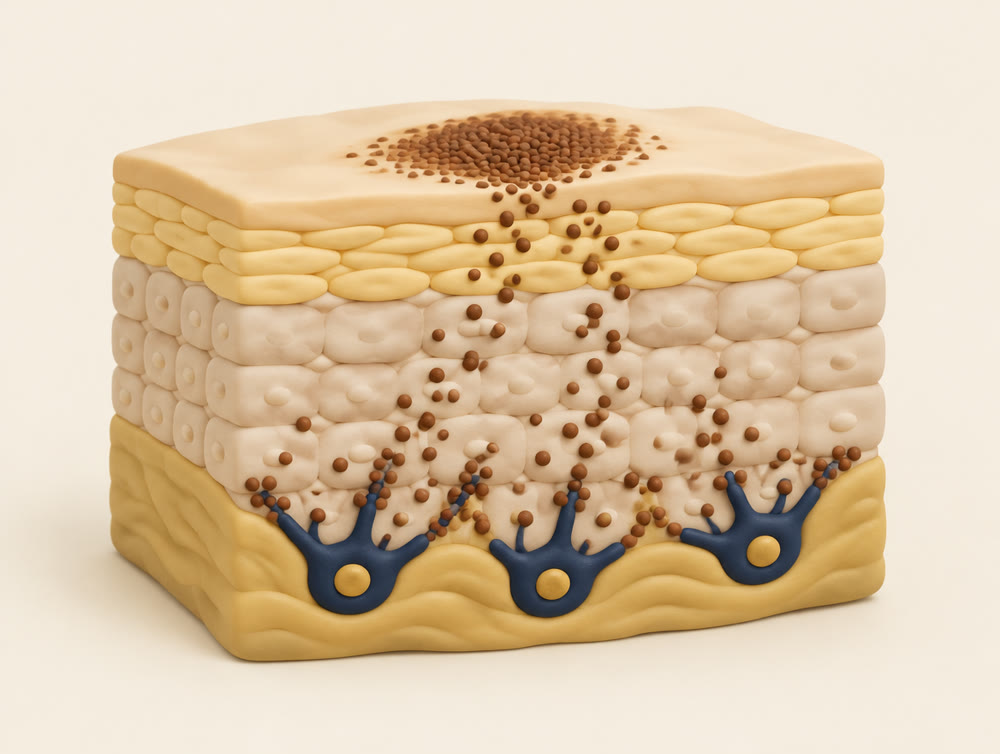
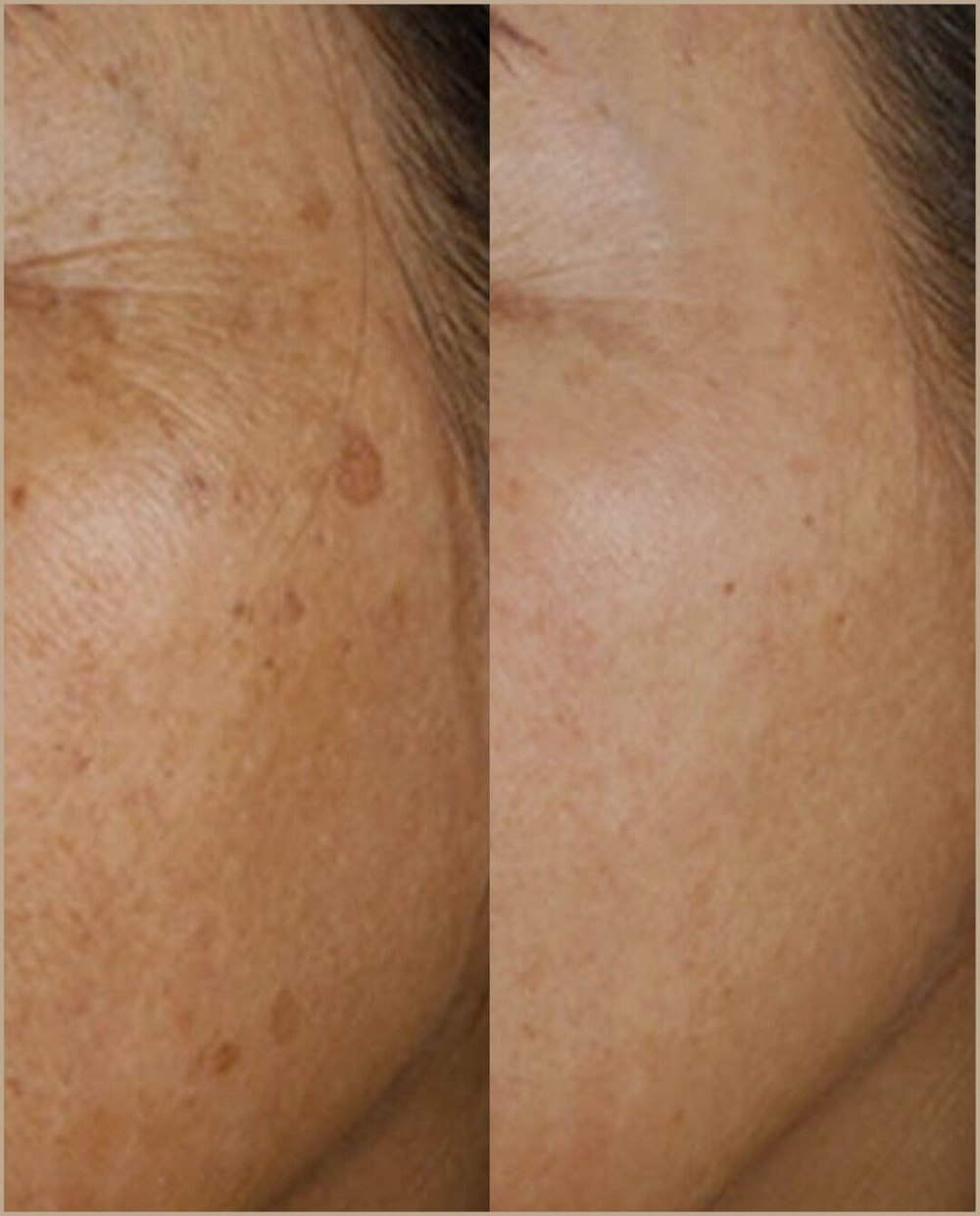
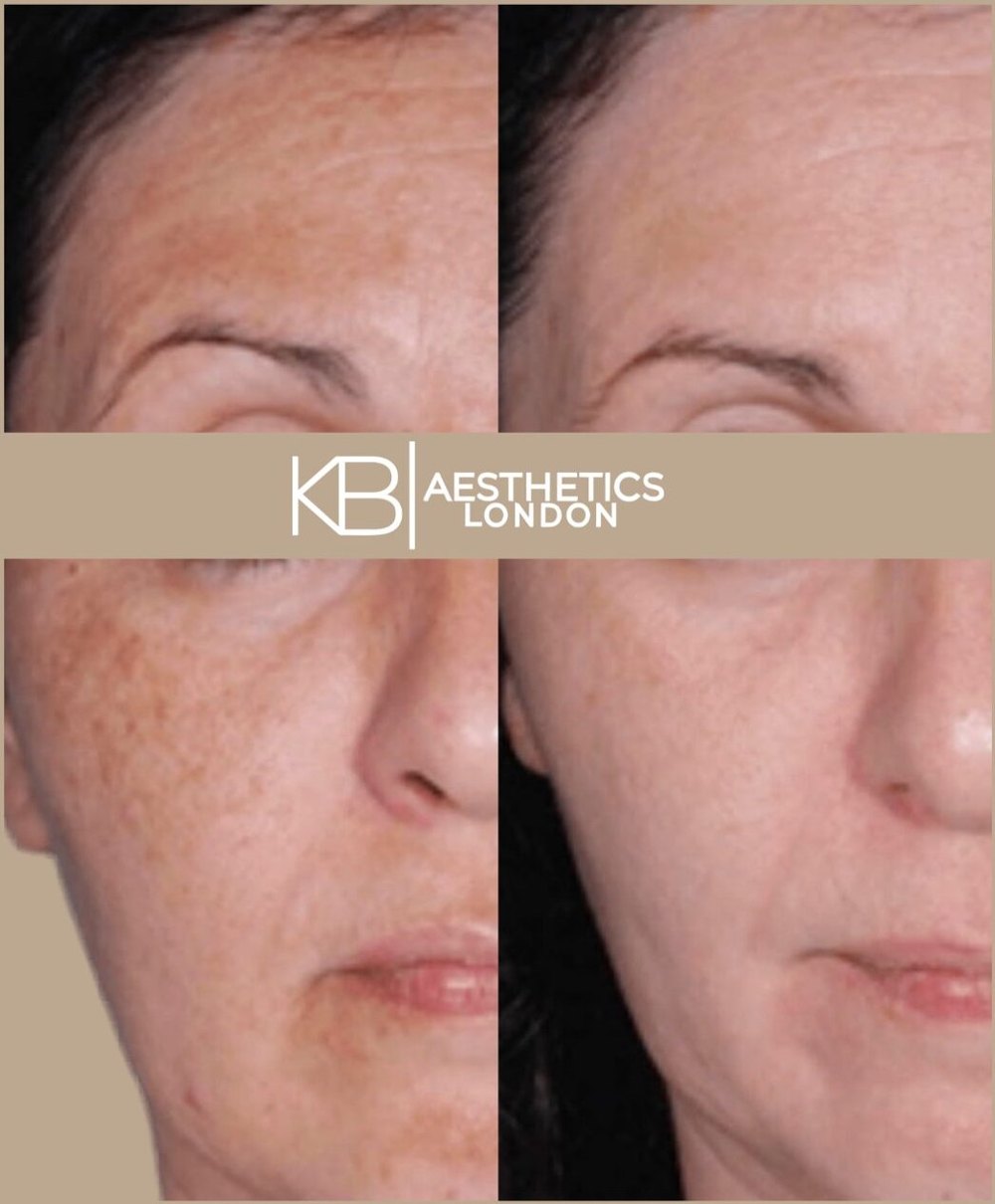
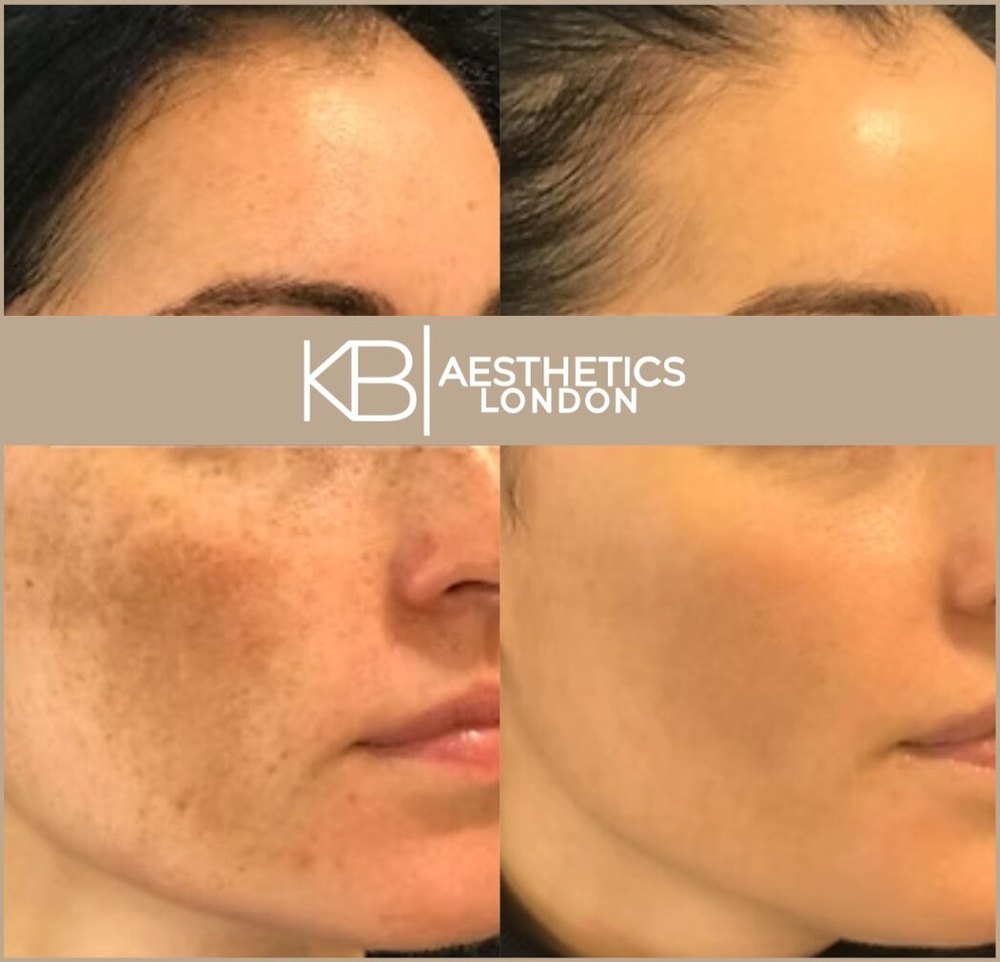
Pigmentation is your skin's own protection working too hard. Sun and inflammation switch on the cells that make melanin, and when they make too much in one place it stays as a mark. It sits deep, so no scrub will reach it. We calm the triggers, guard against the light, and lift it a layer at a time.

Deep in your skin sit the cells that make melanin. Sun, heat and inflammation all switch them on, and they push pigment up towards the surface where you see it as a patch or a mark. Because it is made in the deeper layer, a wash or a scrub cannot reach it. All that does is irritate the skin, and irritation makes more pigment.
London sun is sneaky. UV comes through cloud, car windows and office glass, quietly, all year round, and every bit of it feeds pigment. On top of that, every bit of inflammation leaves its own mark, so a single spot or an ingrown hair can shadow the skin for months. Deeper skin tones make more melanin, so they mark more easily and hold it for longer.
None of this is your fault. It is simply how your skin protects itself, and once you understand it, we can plan around it.
“A good scrub or a brightening wash will lift these marks off my skin.”
Pigmentation lives deep, so surface products cannot reach it. Worse, they irritate the skin and can darken it further. And without daily SPF nothing we do will hold, because the sun simply makes more.

The Observ skin scan shows how deep your pigment sits and maps the UV damage stored in the skin long before it shows on the surface. Surface marks lift faster, deeper pigment asks for more patience, and this guides everything we choose.
How deep it sits decides how fast it lifts and which tools are safe to use.
A hidden map of stored UV damage, often the biggest driver of how a face is ageing and marking.
Where the skin is inflamed it keeps making pigment, so we settle this first.
If it is worn thin, actives sting and irritation adds more marks. We repair it so treatment calms rather than provokes.
This is the whole game. Rain or shine, indoors near a window too. It protects every bit of progress we make.
Do not pick or squeeze. Every bit of trauma leaves a fresh mark, and picking is how pigmentation spreads.
Treat spots, grazes and irritation quickly and gently. The sooner the skin settles, the smaller the mark.
UV passes through windows and grey skies. If you drive or sit by daylight, you still need your SPF on.
Protection comes before correction, always. For most people the first rung is the bulk of the answer, and we only climb higher once the skin is calm.
A vitamin A step to treat the mark at its source, a vitamin C to guard against new pigment, a calming step to even the tone, and daily SPF holding it all in place. We always start topical first, gently.
A soft, carefully chosen peel encourages pigmented cells to turn over without stripping or inflaming. When the skin is quiet, SkinPen improves texture and opens channels so your pigment-correcting skincare travels deeper.
A few marks sit deeper than skincare alone will shift. If treating those directly would suit you, we say so honestly and refer you to someone we trust, because rushing pigment is how you make it worse. Then maintenance: protection, gentle skincare, and glow if you want it.
Your personal plan and prices are built for you at your consultation. This is the toolkit, not the bill. Treatment prices are on each treatment page and on Prices.
We protect first, we treat gently, and marks fade slowly, layer by layer, over months rather than weeks. It can feel slow, and there may be a stubborn patch that takes its time, but it does clear.
You will not be doing this alone. We protect every bit of progress and we adjust as we go. Steady wins here, every time.


Three SkinPen, three Obagi Blue Peel Radiance, two HydrO2Facials, twelve Dermalux LED sessions, one medical-grade active chosen for your skin, plus KB VIP, 10% off further treatments and in-clinic skincare. Yours is built for you at your consultation, and a membership is only ever suggested if it is the sensible way to pay for the plan you already have.
Your skin renews roughly every four to six weeks, and pigment lifts one cycle at a time. Most people see the first real change around month three, with the best results over six months and beyond.
Yes, and it is where we are most careful. Deeper skin tones make more melanin, so we choose gentler acids, lower strengths and strict sun protection, and we never provoke more pigment than we clear.
It can, if the sun is allowed to. Daily SPF and a simple maintenance routine are what keep it faded.
No. Melasma is hormonal and reacts to heat and light, so it needs an even gentler approach. It has its own page.
Observ skin scan, an honest conversation, and a written plan within days. £50 with an advanced skin therapist, £95 with Kelsey, our nurse prescriber.
Book your consultationAnswer eight quick questions and read what is likely going on with your skin, and what to ask us.
Take the skin quiz